
Grip Like an Athlete: The Science Behind Why Monkee Grip Dead Hangs Build Superior Tendon Strength
The Science Behind Why Monkee Grip Dead Hangs Build Superior Tendon Strength
Most people think grip strength is about muscle—but real grip power starts in your tendons. Muscles move weight. Tendons transfer it. And if you’ve ever felt your hands fail before your back during a hang or pull, that’s not your muscles giving up—it’s your tendons saying “we’re not ready.”
Monkee Grip dead hangs target that exact weak link. By forcing your fingers, forearms, and wrists to adapt to friction instead of stability, they create the kind of deep structural strength you can’t fake in the gym.
Why Tendon Strength Matters More Than You Think
Tendons act like cables, connecting muscle to bone. When you train them properly, they store and release force like elastic steel. Strong tendons mean better power transfer, higher endurance, and fewer injuries. Weak tendons, on the other hand, limit everything—they fatigue early, restrict muscle output, and take weeks to recover when overstrained.
That’s why top-level athletes—from climbers to MMA fighters—focus on tendon conditioning, not just muscle growth. It’s the invisible strength that decides whether you can hold on or fall off.
How Dead Hangs Build Tendon Density
Dead hangs are one of the most efficient ways to strengthen tendons, but only when done under tension. Standard bar hangs apply linear force—consistent, predictable, and relatively safe. But your body adapts fast, which means tendon growth eventually plateaus.
Rope-based grips like Monkee Grips add friction, micro-instability, and rotation. Each millisecond, your fingers adjust to hold on. That constant recalibration increases the time tendons spend under load, which triggers collagen remodeling and thicker, denser connective tissue.
✅ More time under frictional tension
✅ Greater micro-load variance across the fingers
✅ Continuous neural feedback for grip control
✅ Improved load tolerance in wrists, elbows, and shoulders
This isn’t just training—it’s structural reinforcement.
Why Rope Grips Work Better Than Bars or Thick Handles
Thick grips challenge your muscles, but they don’t recreate the chaos of real-world grip use. They offer a solid surface for your palms, reducing friction demand. Rope grips, however, force you to generate your own friction. You’re not just holding—you’re clinging.
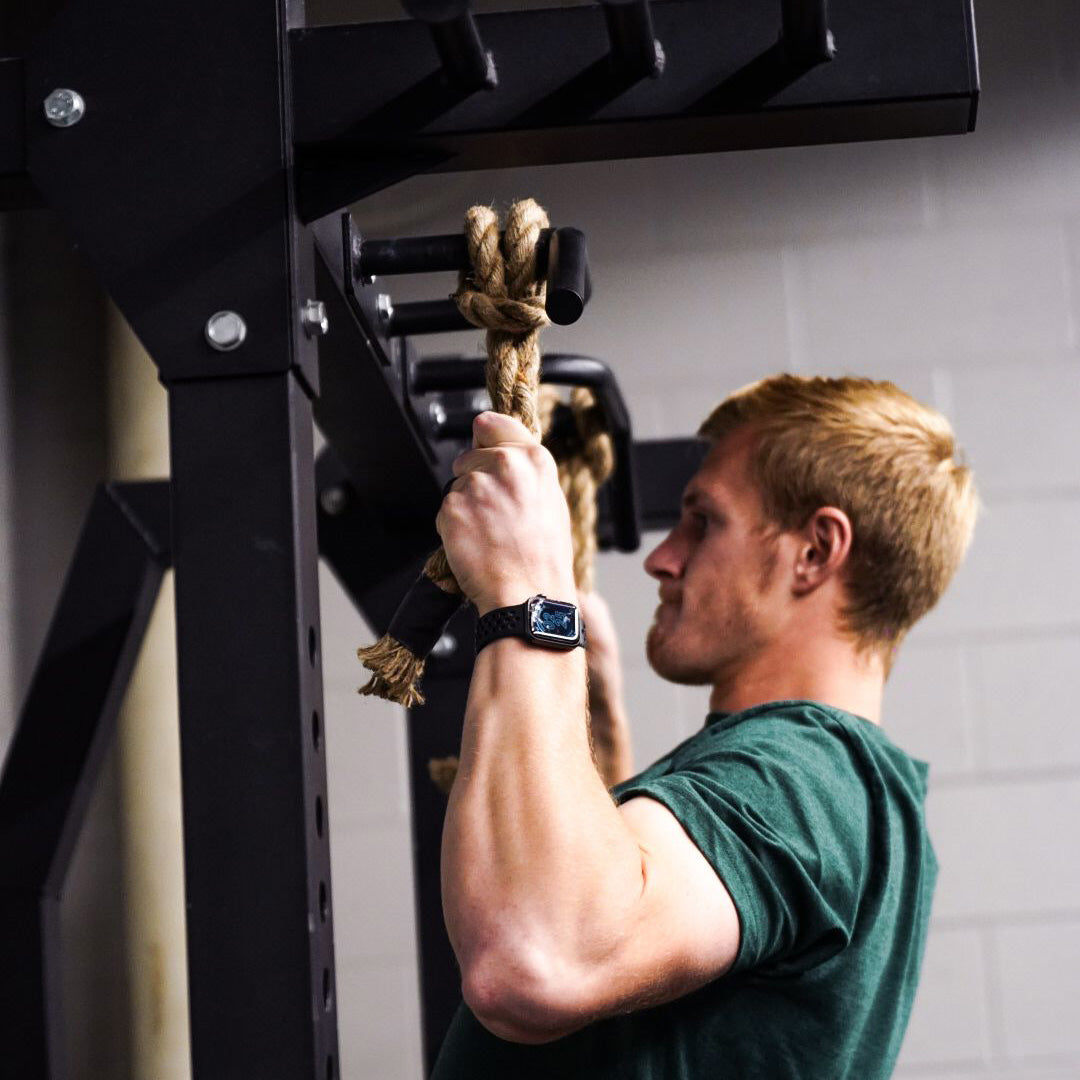
That’s where Monkee Grips shine. They attach securely to any bar or handle using a cow hitch (girth hitch) that locks in place without slipping. You get true rope-based resistance without the danger of the grip rotating or falling off. It’s the safest way to train instability and tendon endurance anywhere—gym, park, or home.
The Science of Adaptation: Collagen Remodeling
When tendons are exposed to controlled mechanical stress, they adapt by increasing collagen crosslink density. That’s what makes them tougher and more fatigue-resistant. But this only happens under slow, sustained tension—exactly what Monkee Grip dead hangs deliver.
Every second you hang, your tendons are learning to bear more force, more evenly, across more fibers. Over time, this makes your grip not just stronger—but unbreakable.
How to Start Training with Monkee Grip Dead Hangs
Start light, progress slow. Tendons adapt slower than muscles, but the payoff is massive.
1️⃣ Begin with assisted hangs using a resistance band or foot support.
2️⃣ Work toward 20–30-second unassisted hangs.
3️⃣ Progress to single-arm or offset hangs once your grip can maintain tension.
4️⃣ Add dynamic movement or rotation once control is solid.
Two to three sessions per week is enough to stimulate tendon remodeling without overtraining.
The Takeaway: Grip Like an Athlete, Not a Lifter
Lifters build muscle. Athletes build structure.
Monkee Grip dead hangs don’t just train your hands—they rewire your entire upper body to stay connected under pressure. When your tendons catch up to your muscles, your performance jumps everywhere: pull-ups, carries, climbs, combat, even daily grip endurance.
🦍 Train smarter. Grip harder. Hang longer.
👉 Shop Monkee Grips: www.monkeegrip.com
🎥 See tendon training in action on our YouTube channel.
Read more
From Forearms to Core: How Rope Grip Dead Hangs Activate More Muscle Than You Think
Most people think dead hangs are all about forearms—but switch to rope grips, and you’ll feel muscles you didn’t even know existed. When you hang from friction instead of steel, your hands, shoulde...
Read more
Why Grip Strength Limits Your Deadlift More Than Your Back or Legs
Many lifters assume a missed deadlift means their back or legs are not strong enough, but often the real limit is their grip. The deadlift is only as strong as your connection to the bar. When the ...
Read more
Leave a comment
This site is protected by hCaptcha and the hCaptcha Privacy Policy and Terms of Service apply.